
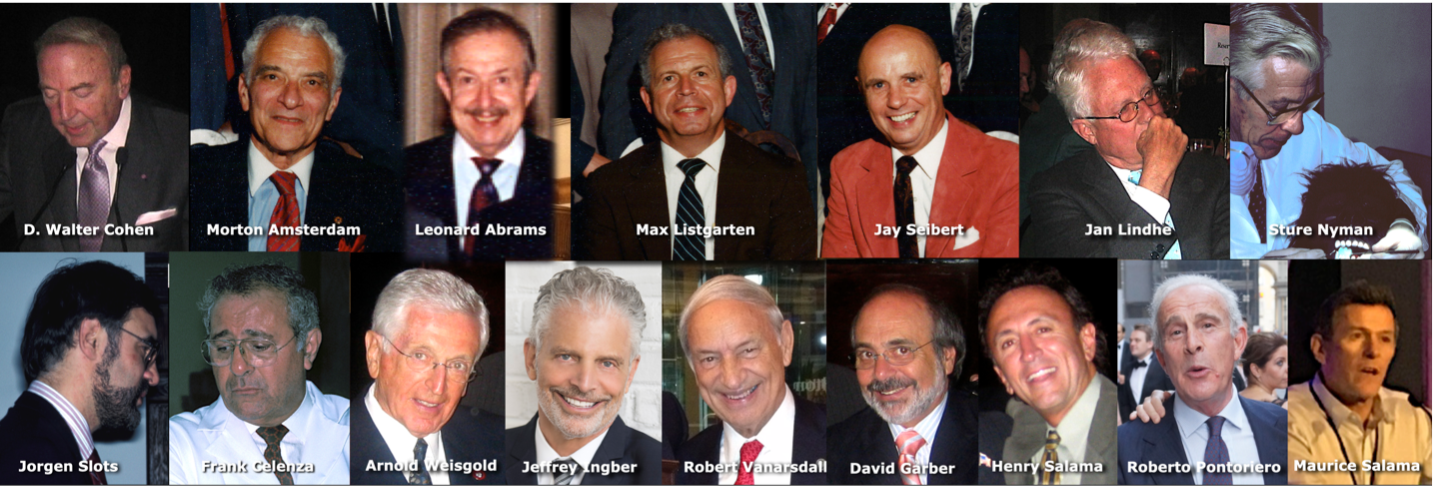
Sixteen of the clinicians, researchers, and educators who shaped the discipline. In 70 years, the Periodontal Prosthesis Program produced fewer than 150 graduates — an average of 2.5 admitted per year
The Philadelphia Periodontal Prosthesis Lineage:
Advanced, not reinvented.
Periodontal Prosthesis originated from the groundbreaking work of Drs. Morton Amsterdam and Walter Cohen, who developed a comprehensive framework for the management of patients with severe dental and periodontal conditions. Their visionary approach eliminated the barriers between specialties; establishing the foundation for what would become a unified system-based philosophy of treatment.
The dissolution of the Periodontal Prosthesis Program risks losing a 70 year tradition of excellence and the erosion of its knowledge base to the detriment of generations of alumni, the community, and the dental profession.
The Perio-Prosth Institute (PPI) is the new institutional home for the living, contemporary practice of Periodontal Prosthesis. Its mission is to preserve the clinical philosophy that shaped generations of clinicians, and advance it through a unique didactic methodology designed for today's practicing professionals.
The Perio-Prosth Institute: A Sequence for Diagnostic Rigor
The traditional model of continuing education is built on hindsight bias — reasoning backward from a known outcome rather than forward from the data. Sitting in a dark lecture hall watching a speaker present optimized before-and-after slides does nothing to develop diagnostic predictability at your own chair; you are simply viewing a predetermined conclusion, retroactively made to look inevitable. Knowing a case's subject matter in advance works in the opposite direction: it narrows the diagnostic lens before the data has even been reviewed. A clinician told in advance that a case concerns occlusion will tend to interpret uncertain findings as confirming that expectation, at the expense of alternative explanations — a well-documented pattern known as confirmation bias. PPI operates on an active diagnostic model instead: it trains clinicians to spot intellectual and clinical inconsistencies before an outcome is known, not after. The topic of a case is something the room must identify together, not something it is told.
At PPI, we believe that true clinical mastery isn't taught—it is forged. Founded to advance the biological and biomechanical integration required to manage complex dental and periodontal conditions, our program provides a high-stakes, interactive environment designed exclusively for established clinicians. We sharpen your clinical instincts through a rigorous, interactive process that transforms how you approach comprehensive care.
Our methodology moves through four defined phases, giving structure to what can otherwise feel like an overwhelming number of biological and biomechanical variables — turning complexity into a repeatable process.
The Four Pillars of the PPI Brains-On Exercise™
The PPI Brains-On Exercise™ moves through four defined phases, giving structure to what can otherwise feel like an overwhelming number of biological and biomechanical variables — turning complexity into a repeatable process.
1. The Blinded Case Presentation
The Status Quo: Standard courses reveal final treatment outcomes immediately, allowing hindsight bias to interfere with the learning experience.
The PPI Framework: You are presented with raw, uncompromised patient clinical data—comprehensive histories, periodontal charts, imaging, and mounting records—without disclosing the diagnosis or final treatment. You must evaluate the data organically, relying strictly on your clinical acumen to construct a comprehensive diagnostic thesis from scratch.
2. Multilateral Dialectic
The Status Quo: Instructors dictate the "right" answer, eliminating critical thinking and peer interaction.
The PPI Framework: The cohort enters a moderated discussion as a panel of peers. While teams collectively defend diagnostic logic and treatment plan rationale, each team member is held accountable for their position — faculty and participants test biologic and biomechanical assumptions, requiring every proposed intervention to be validated on its merits.
3. Literature Alignment (Evidence-Based Dentistry vs Clinical Reality)
The Status Quo: Clinical choices are frequently based on habit, subjective intuition, or trending social media techniques.
The PPI Framework: Every proposed clinical pathway must be anchored in evidence. The cohort examines the relevant literature and applies it to the specific clinical circumstances to determine whether the plan holds up to academic scrutiny — rigor a clinician can carry directly back into practice.
4. Comparative Outcome & Closed-Loop Feedback
The Status Quo: Exercises end with theoretical discussions, leaving clinicians without a definitive benchmark.
The PPI Framework: Only after alternative proposals have been thoroughly debated are the actual treatment and its follow-up revealed — in some cases, decades of it. Comparing the group’s theoretical roadmap against real clinical results closes the loop: each participant sees precisely where a plan aligned with the outcome, and where hidden biological or biomechanical variables altered its trajectory.
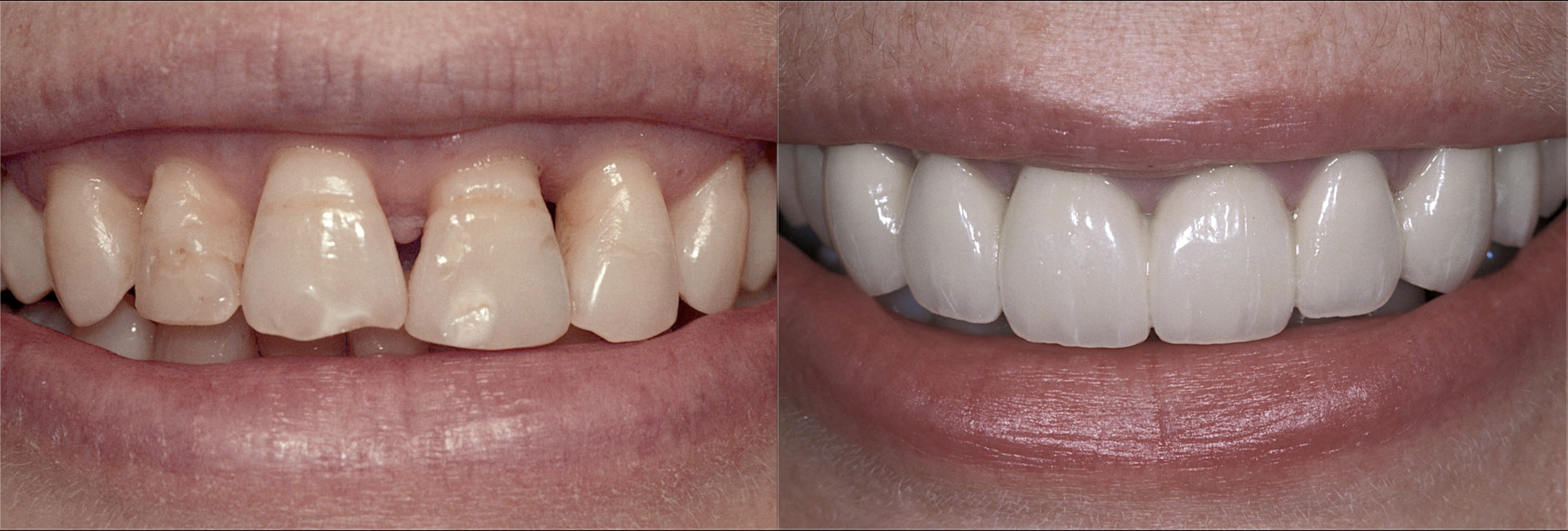
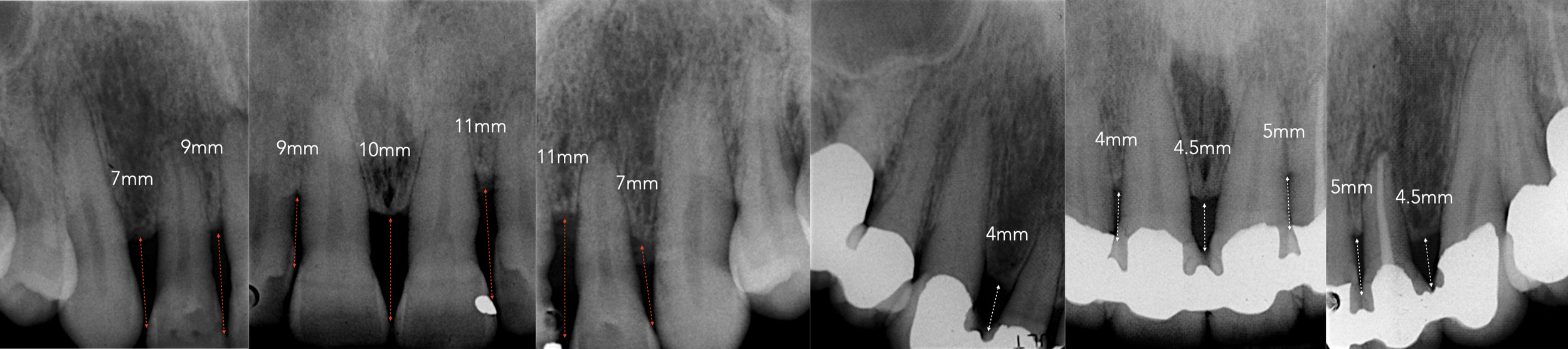
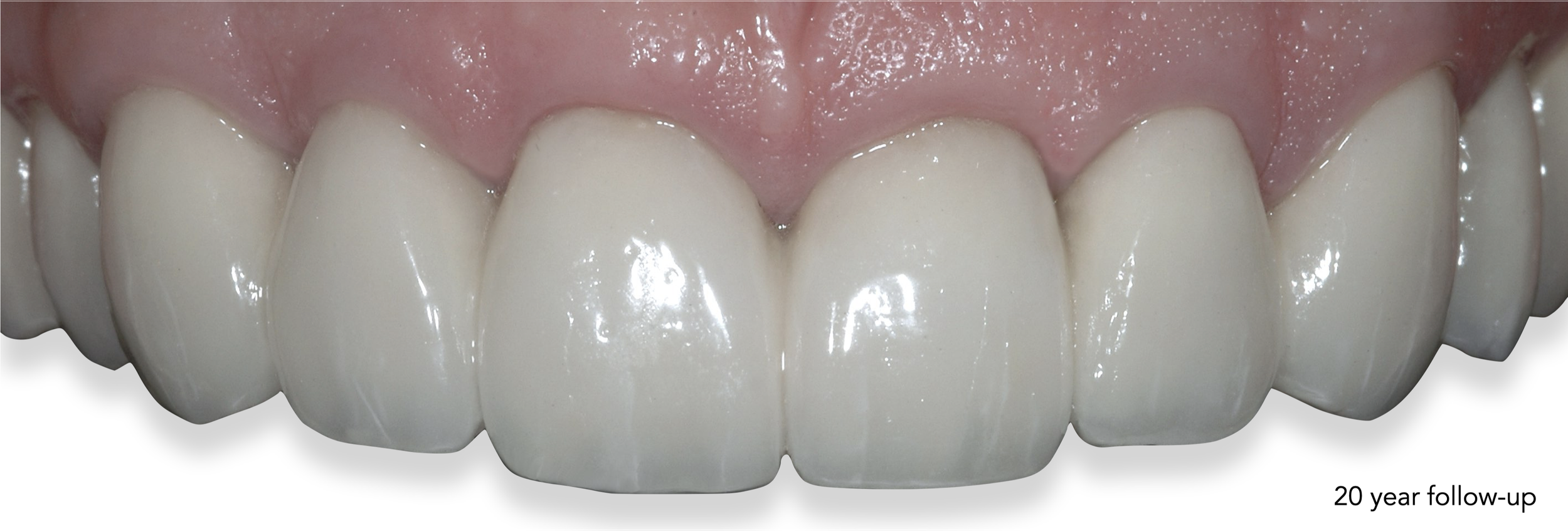
Initial presentation, treatment outcome, and 20-year follow-up radiographs and photographs documenting long-term stability — the same standard of outcome review applied throughout the PPI curriculum.

In Memory of Dr. Myron "Ron" Nevins 1938 – 2025
Dr. Myron "Ron" Nevins was Editor-in-Chief of the International Journal of Periodontics & Restorative Dentistry for decades. He served as president of the American Academy of Periodontology, and chaired the International Symposium on Periodontics & Restorative Dentistry for 14 years. Ron became a mentor to Dr. Lee — guiding him on how to design symposium programs during those early years, and later encouraging him to publish his S.M.A.R.T.® research. That mentorship helped shape the pedagogical foundation of this Institute. Ron passed away on December 24, 2025.
The Perio-Prosth Institute has no affiliation with the University of Pennsylvania or Penn Dental Medicine. References to Penn are historical.